What happened to my coding tutorial audience
By Flavio
Google sent fewer readers to my coding tutorials. Then I started using the same AI tools that changed how those readers code.
In 2024, I noticed Google was sending fewer people to this site. It slid for months. The first thing I did was spend more time on my courses.
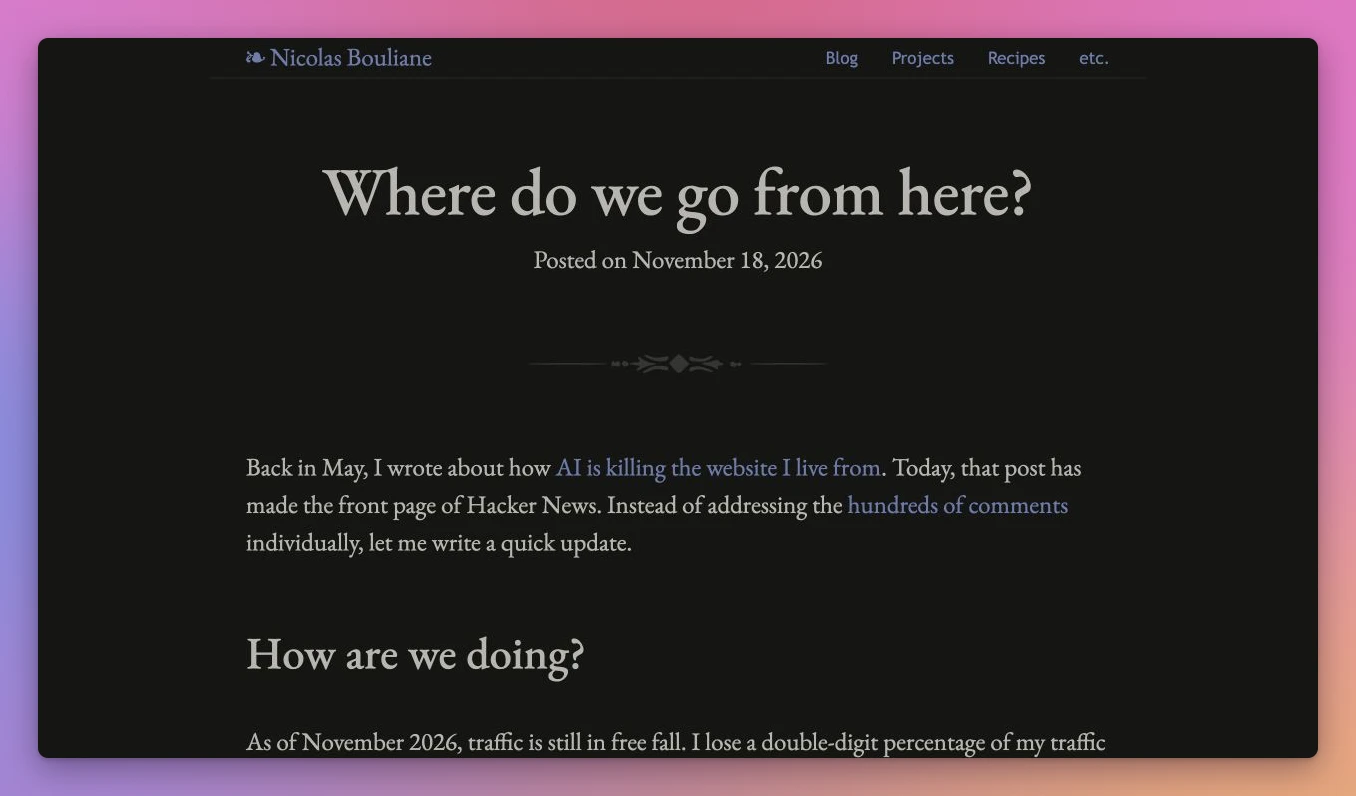
I thought about that when I read Nicolas Bouliane’s post about All About Berlin, which came up again on Hacker News. He says his site lost 75% of its traffic after years of growth, and he attributes the loss to Google’s AI Overviews. One of the things he talks about is hearing from the people his guides helped. When someone gets their answer in Google and goes about their day, that conversation never starts.
In his November follow-up, he says the site still pays his bills, even as the audience keeps shrinking. He wants to keep writing guides and publish more of the information he collected himself, like wait times at the Berlin immigration office.
Two ways to lose a reader
When I wrote about SEO for developers in 2018, I was thinking about how a little tutorial on my site could show up for a very specific question. Google was how you found that tutorial. Now Google can show you an answer right there.
Pew Research Center looked at the browsing activity of 900 U.S. adults in March 2025. Here’s what people did after landing on a Google results page.
| What people did next | With an AI summary | Without an AI summary |
|---|---|---|
| Clicked a traditional search result | 8% | 15% |
| Ended their browsing session | 26% | 16% |
That’s one change. The other is that a lot of the little searches a programmer used to make can now happen inside a coding tool. I do it myself. When an AI tool can work on the code in front of me, I can ask it to make the change directly. The search I would have done to find out how to make that change never happens.
A lot of my readers were junior developers or people trying to become one. I also think about what it means to spend evenings learning to code when there’s a much tougher market for your first job. In U.S. payroll data through June 2026, Stanford researchers saw employment fall among software developers ages 22 to 25. How many people still decide to learn when that first step looks harder?
What I did with my time
Courses were my first move. Then AI coding became more common, and I got more comfortable using it myself. I started making web apps and putting up websites on topics I hadn’t written about before. I was trying different ideas to see which ones I wanted to keep working on.
These days I’m making desktop apps. One thing I like about that is how much I can do on the person’s computer. I can build something useful without signing up to store people’s data on a server. Taking responsibility for other people’s data is a big part of running a web app, and I don’t want that to be a big part of my day.
I’m still figuring out what kind of desktop software I want to spend years making. In 2024, when the traffic first started to slide, I put more time into something I already knew how to do. The part I didn’t see coming was how much time I’d spend building things with the same tools that were changing how people found my tutorials.
Want me to talk about your product? You can sponsor this site.
Related posts about ai: