Moving a simple site to Astro
By Flavio
Published · Updated
Tagged: Astro
Learn how I moved a simple HTML and CSS site to Astro, from running npm init astro to sharing a common layout and deploying the result on Cloudflare Pages.
I have a website that is powered by Hugo, but I want to switch to using a simpler solution, so I don’t have to deal with Hugo templates when I want to make a change.
Astro seems like a good choice for it.
I feel more familiar with JSX, and I can choose to use a framework like Svelte or React if I want later down the road.
In this article I’m going to show you how I switched.
The site I’m talking about is https://thejscourse.com, the website of the JavaScript Course.
It’s already live, it’s built with plain HTML and CSS, inline in the page. I just have an images/ folder, and a thanks/index.html page that’s where I thank customers after the purchase.
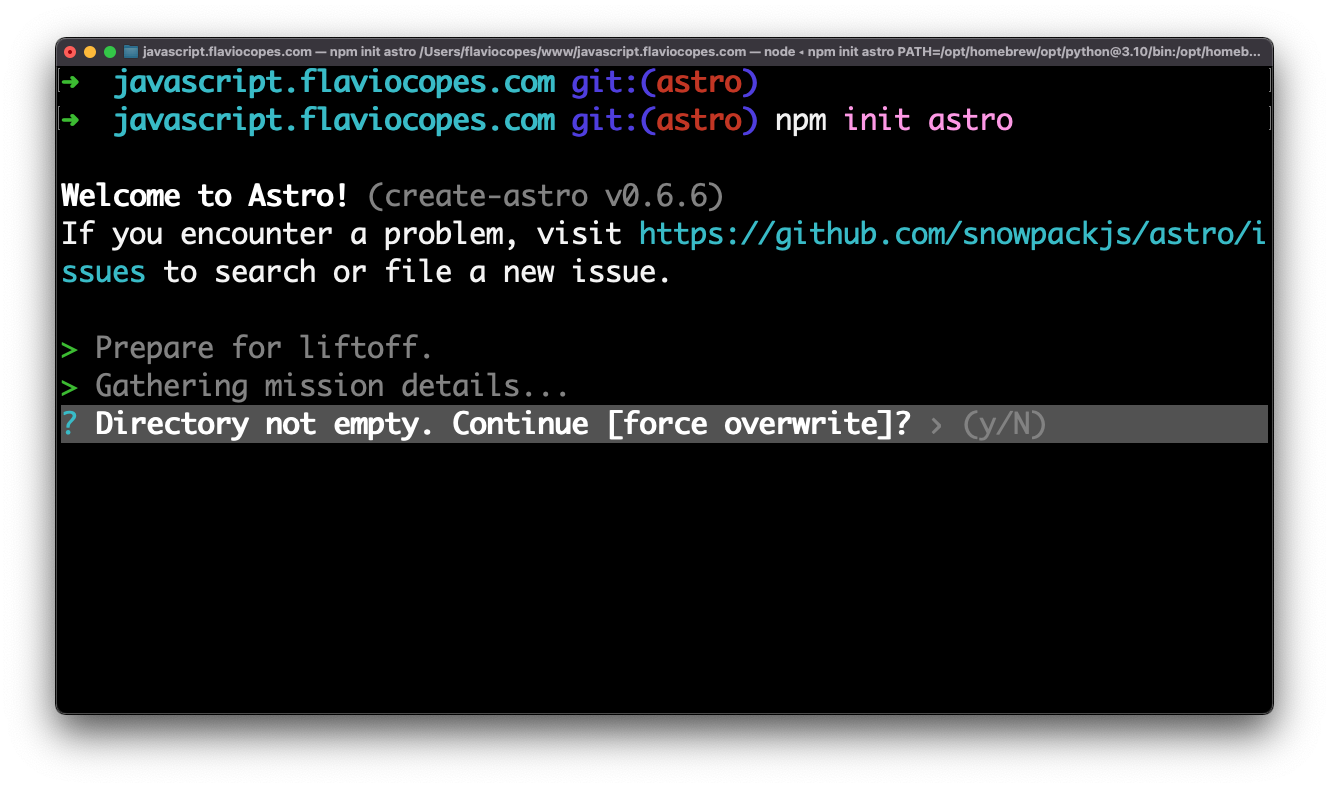
Here’s what I did. First I created a new branch of the Git repository, and I initialized Astro in there, with npm init astro.
That was the command in 2021, when Astro was still on a 0.x release. Today you start a project with
npm create astro@latest, and the prompts look different, but the flow is the same.
This asks me to force overwrite the existing files:
Then I chose the Minimal template and I finished the installation:
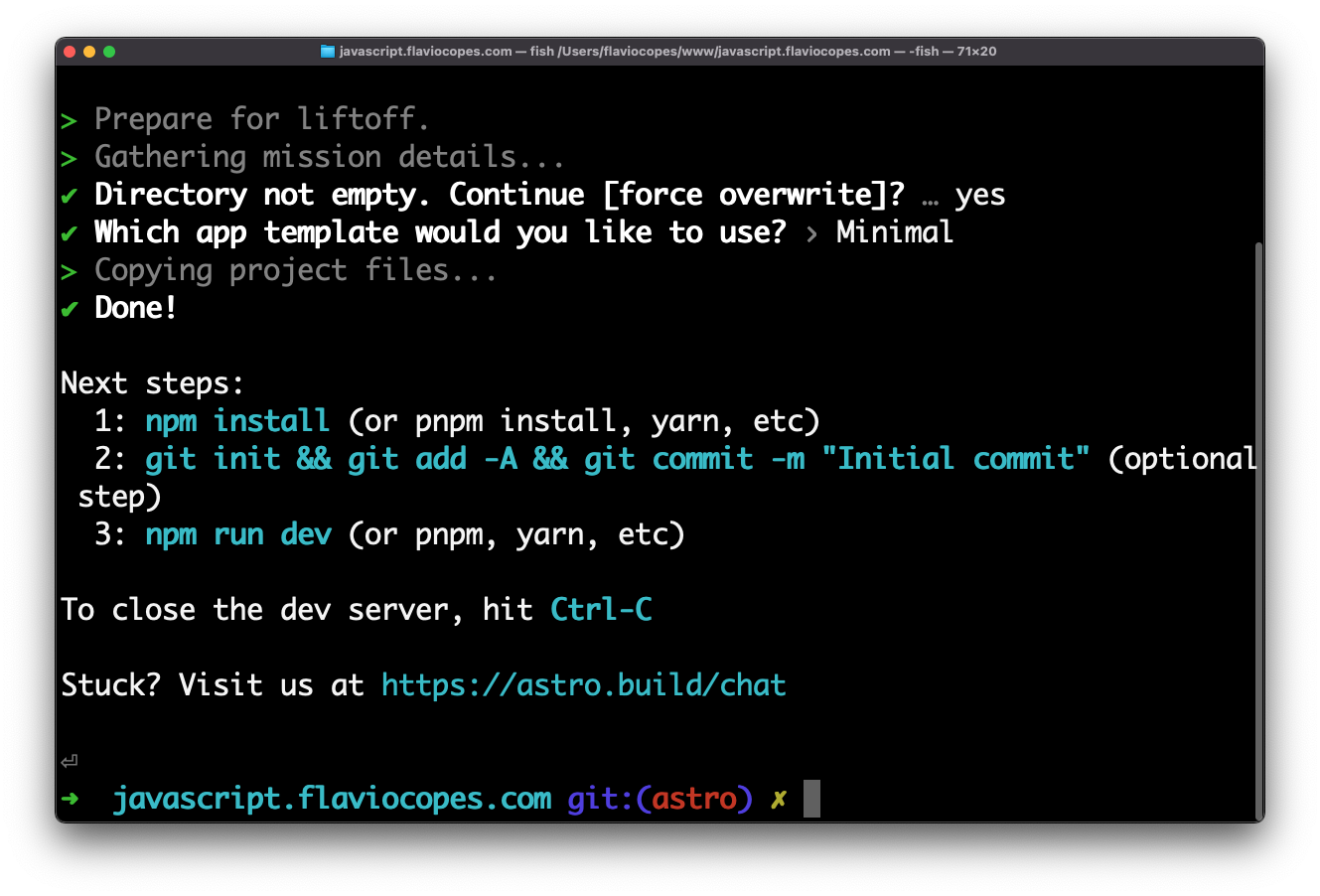
I moved the images folder under public and I moved index.html to src/pages/index.astro.
I ran npm install and npm run dev to see my work so far.
It worked!
Then I moved the thanks/index.html page to src/pages/thanks.astro
Checked the URL, it worked!
That was a quick transition. Transferring HTML needs zero work.
Not what you’d expect when working with JSX. But as you know Astro’s JSX is a bit unique, and makes our life easier. No more camelCase attributes, or className= for all HTML classes.
Then I decided to make a common layout for both pages, since they share a lot in common.
I made a layout in src/layouts/common.astro and made a simple skeleton with the head and body of the page, with all the CSS, font import, meta tags etc, and the basic layout container.
With <slot /> like I explained in my post about Astro layouts.
The only thing I had to change was to use <style global> instead of <style> (in current Astro releases the attribute is is:global, so <style is:global>), and the links to images, which were using a relative URL like ../images. Now all images are in /images. If you don’t do this, the build will fail, as you can test using npm run build locally:
[build] file:///Users/flaviocopes/www/thejscourse.com/src/pages/thanks.astro: could not find file "/_astro/src/images/welcome2.jpg".In this way, I can modify all in need in that layout, and that’s applied to all pages.
Finally, the deployment part.
I went to my Cloudflare Pages dashboard, configured the build:
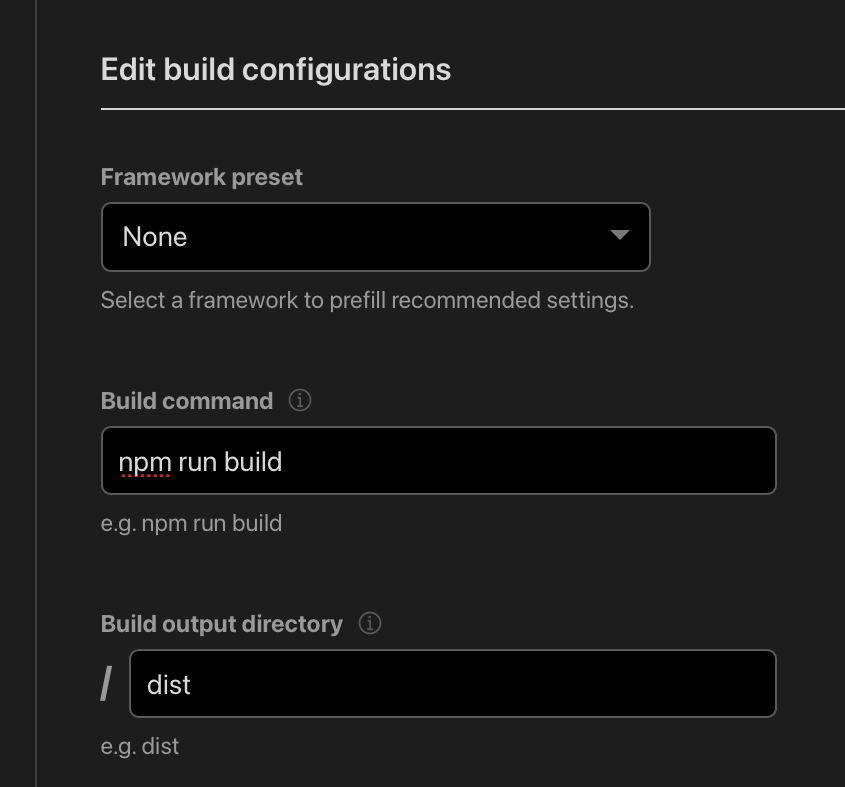
And configured the NODE_VERSION environment variable to ^14.13.1 in the site settings, otherwise by default it’s too old.
Still worth doing in November 2026. Pages projects on the older v2 build image default to Node.js 18.17.1, which is too old for Astro 7 (the latest 7.4 releases need Node.js 22.23.4 or newer). The current v3 image defaults to Node.js 22.23.4, just enough, and Cloudflare moves v2 projects to v3 on February 23, 2027. I still pin the version, so an Astro update that raises the minimum can’t break the build. This blog does it with a
.node-versionfile in the repository containing24.15.0. TheNODE_VERSIONenvironment variable in the dashboard works too.
Pushed the branch to GitHub, which triggered a preview build.
The deploy time went from 2m 26s, for a simple HTML site with no build step at all, to about 3 minutes. Not a big difference.
The most of this time is setting up the build environment, which CFP does for any kind of site anyway.
After making sure everything was set up correctly, I merged the branch with the default one I set in the CloudFlare Pages settings, and I pushed the changes to GitHub so the changes could go live.
Now Astro is powering http://thejscourse.com. (Today that domain redirects to https://courses.flaviocopes.com, where all my courses live.)
Want me to talk about your product? You can sponsor this site.
Related posts about astro: